
You searched for "OME"
AUDIOLOGY - In conversation with Dr Jerry Northern
Gareth Smith chats with Dr Jerry Northern and learns about his fascination with Mount Everest, the legendary Marion Downs and his unique career in audiology… Jerry with the legendary Marion Downs. Tell us about your background, how did you come...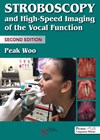
Stroboscopy and High-Speed Imaging of the Vocal Function – Second Edition
When I was asked to review this book, I was really looking forward to receiving it and eagerly awaited the postman on a daily basis until it arrived. Needless to say, it did not disappoint. The author, Peak Woo, is...Changing the face of global health: short-term surgical trips
With the growth of global health awareness, global surgery has emerged as a key focus area. This article examines short-term surgical trips (STSTs) as one of the ways used to address some of the gaps in global surgery. It demonstrates...Looking at musculoskeletal disorders in audiology
Musculoskeletal disorders are one of the leading cause of sickness absence from work, work disability and loss of productivity across all European Union member states. Isla Beausire is a working audiologist with a personal and professional interest in this subject...My experience of addiction
In this incredibly honest and thought-provoking article, we hear from an anonymous doctor who has struggled with addiction. The nature of addiction is a subject of interest to a broad range of scientific disciplines, from medicine to psychology, psychotherapy and...Automated audiometry: in conversation with the creator of AMTAS®, Robert Margolis
As automated audiometry becomes more widespread for busy clinics and tele-audiometry, Laura Prigge from GSI interviews Dr Robert Margolis to discuss his automated method for testing auditory sensitivity (AMTAS®). What motivated you to think of automated audiometry? When I was...Pursuing part-time postgraduate qualifications
Thinking of going back to university to do further study? We hear from one audiologist who identified an area of further study and specialisation and took the leap. My career in audiology began in 2003 through a traditional route in...In conversation with Prof Nobuhiko Isshiki
A 90th birthday is definitely a landmark that should be observed and celebrated. Elisabeth Sjögren interviews this man who has been such a huge influence in the world of laryngology. Nobuhiko and Keiko in the cosmos field. Congratulations on your...
Does middle turbinate resection affect olfaction in endoscopic transsphenoidal surgery?
The middle turbinates (MT) are sometimes partially resected during endoscopic transnasal transsphenoidal pituitary surgery to improve surgical access. Some outfracture the middle turbinates instead. This article presents results of the first prospective randomised study, investigating the effects of such surgery...
Is there a ‘best’ ventilation tube?
Studies on grommet materials and sizes are not exactly new but this was a well-designed randomized study in Sweden with some useful findings. The extrusion rate and complications associated with four different ventilation tubes (grommets) were assessed prospectively in 400...
Combined endoscopic and transcutaneous approach for removal of parotid stones
The authors describe a small case series (n=8) of patients with obstructive symptoms from sialolithiasis of the parotid gland. A combined endoscopic and transcutaneous approach was used. The position of the stone in Stensen’s duct was identified by endoscopic transillumination....


