
You searched for "device"

It is all so COSI…
Something which we have realised for a long time in the UK is the importance of the clinician in the assessment and long-term adoption of hearing aids. This common sense article outlines the need for more individualised patient pathways, thinking...
Hearing impairment awareness in primary school teachers
Early intervention of hearing loss is crucial in school-age children to avoid delay in development of communication, cognition, language and social skills. Teachers play a crucial role in identification and support in cases of progressive or late-onset hearing loss. Using...
WRMD in otolaryngology
Work-related musculoskeletal disorders (WRMD) are now front and centre in the practice of otolaryngology head and neck surgery, with many surgeons suffering pain, disability and shortened career spans. Common WRMDs include degenerative lumbar spine disease, rotator cuff pathology, degenerative cervical...MICRONOMIC® III Good things do come in small packages!
Entermed’s budget-friendly Micronomic III is a compact workstation designed to accommodate every ENT surgeons’ basic requirements in tight conditions.
Drooling: what is it like to be unable to manage your own saliva?
Drooling in Parkinson’s is associated with less frequent and inefficient swallowing, resulting in a build-up of saliva in the mouth that then moves beyond the lips. It often causes discomfort as the skin becomes sore, and results in embarrassment. The...
Higher revision rates with coblator after paediatric partial tonsil-adenoidectomy
Coblator is a preferred option in many institutions for tonsillectomy as it is associated with significantly less blood loss and intraoperative time. This retrospective cohort study compared the revision rates after paediatric partial intracapsular tonsillectomy and adenoidectomy (PITA) with microdebrider...Knowledge is power: the power of mobile technologies to enhance hearing-related knowledge
In recent years, the widespread use of smartphones has made it increasingly possible to improve knowledge, understanding and delivery of hearing healthcare. Melanie Ferguson tells us about the advances in mobile-health applications. Think back to five years ago - what...Dr Huw Cooper, Consultant Clinical Scientist: upcoming Chair of British Society of Audiology
Can you start by telling me something about your own background? After my first degree in Psychology at Reading and a year doing other things, I went to Southampton to do the MSc in 1982. My first job after that...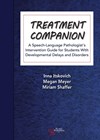
Treatment Companion: A Speech-Language Pathologist’s Intervention Guide for Students With Developmental Delays and Disorders
Written by experienced speech-language pathologists (SLTs) and described as a speech-language pathologist’s best friend, the Treatment Companion serves as a therapy guide for SLTs working with children and young people who have communication delays and/or disorders. The book is aimed...In-office management of subglottic and tracheal stenosis: balloon dilation, laser treatment and steroid injection
Laryngology continues to advance since its development as a subspecialty at the turn of the century. Rarely performed operations restricted to the surgical theatre can now be undertaken in the outpatient / office environment. This detailed article demonstrates, in a...Getting started in research
Dave had a passion for research and was very encouraging in developing a research interest in others. Bhavisha and Amanda are currently working with a team of researchers, patients, research funders, the Department of Health and Social Care and NHS England, to develop the 2023-2028 UK Action Plan for Hearing loss and Tinnitus Research - a set of recommendations to grow hearing research in the UK. Here, they discuss their journey to hearing care research and how you could get involved in the world of research.


