
You searched for "on-call"
In conversation with Sam Lear, BAA President: leading audiology forward
Dr Samantha Lear is the current British Academy of Audiology President, and Senior Audiology Policy Advisor at the National Deaf Children’s Society. With reviews ongoing in paediatric audiology in England and Scotland, Sam is ideally placed to lead the profession....Chronic rhinosinusitis management: back to the future?
Immunology is a dim and distant medical school memory to many ENT surgeons, but the increasingly complex immunology of chronic rhinosinusitis is fascinating (honestly!). Medical management options in CRS no longer just involves saline and steroids, and we need to...Pre-clinical development of magnetic delivery of therapy to middle and inner ears
Why are we developing this technology? A key problem in drug delivery is getting the therapy to the right place in the body, which is especially challenging for targets that are small, deep and are protected or surrounded by anatomical...In conversation with Professor John Fenton
John Fenton, Republic of Ireland, has recently been appointed President of the Union Européene Des Médicins Spécialistes (UEMS) ORL or European Union of Medical Specialists ORL Section. We caught up with him to find out a little more about his...Clinical guidance: using the NAL-NL3 Fitting System in practice
NAL-NL3 modernises hearing aid prescription with modular, evidence-based modules, improving real-world comfort and communication for diverse listening needs. Hearing aid prescription has long relied on a single, audiogram-based formula to guide amplification. While this approach has delivered reliable outcomes for...
Augmented reality – a quick overview of potential technology
Is that the optic nerve? Where is the carotid? Both questions you would prefer to know the answer to upfront. This article discusses if augmented reality can help us with surgical navigation around the skull base. Although endoscopic skull base...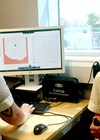
Luna tunes – the plug and play audiometer from Interacoustics
“The professional grade headset designed with screening in mind.” Interacoustics Luna – does it ‘eclipse’* the competition?* * (Although we are fans of moon-based puns, this is not to be confused with Interacoustics’ other stellar device, the Eclipse Evoked Potentials...


