
You searched for "disability"
The changing landscape for hearing loss therapeutics: novel advances of gene and cell therapies
Recent years have seen advances in hearing loss therapeutics, with novel treatments trialled in humans, and others nearing promising first-in-kind clinical trials. First successful clinical trials for a specific form of genetic hearing loss Very exciting news has emerged in...
The basis of auditory processing disorder: what can we learn from corticals?
Auditory processing disorder (APD) is a poorly understood, heterogenous and surprisingly common condition. It manifests as a perceptual difficulty in centrally processing auditory information. Diagnosis is usually based on a variety of behavioural tests involving verbal and non-verbal assessments. In...Unanswered questions in adult ototoxicity associated with platinum-based chemotherapy
Do the potential side-effects on hearing and tinnitus need to be a ‘necessary evil’ of platinum-based chemotherapy? How strong is our evidence base when offering advice to patients and fellow clinicians? David Baguley and his team from the University of...From aaargh to zzzzz: the ABC of paediatric anaesthesia
Andrew McTavish is one of those special breeds who not only relishes complex anaesthesia, but also does so in paediatric patients. Dealing with this group of patients requires careful planning according to accepted practice, and here he discusses some recent...In conversation with George Browning, author of Browning’s Audiology for Clinicians
Professor George Browning. It is one of those superbly bright August mornings in London’s West End. It gives Lamb’s Conduit Street, where I’m meeting George Browning, an almost timeless feeling. The café we meet at is bustling and noisy, and...In conversation with George Browning, author of Browning’s Audiology for Clinicians
Professor George Browning. It is one of those superbly bright August mornings in London’s West End. It gives Lamb’s Conduit Street, where I’m meeting George Browning, an almost timeless feeling. The café we meet at is bustling and noisy, and...The changing spectrum of cancer of the oropharynx: dilemmas and future directions
The association of HPV in oropharyngeal cancer has identified a ‘new disease’, with its unique biologic behaviour, and challenges for clinicians in selecting therapeutic combinations offering maximum efficacy and minimum morbidity or long-term sequela currently under study in clinical trials....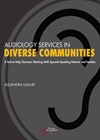
Audiology Services in Diverse Communities: A Tool to Help Clinicians Working With Spanish-Speaking Patients and Families
As a bilingual audiologist (Spanish-English), I have found this book to be a bridge between the two languages in the audiological world. It is a resourceful niched book that enables the practising audiologist dealing with Spanish-speaking adult and paediatric patients...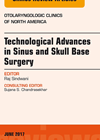
Rhinology and 3D printing
3D printing has increasing applications in rhinology, for instance to create patient-specific preoperative models for procedure planning, including designing a template for reconstruction planning following tumour resection, patient consultation and customised prostheses. The authors focused their review on the role...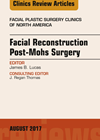
Reconstructing post-resective auricular defects
The auricle is split into six specific anatomic subunits that vary in skin thickness, contour, structural integrity and the availability of healthy surrounding tissues. It is important to reconstruct an aesthetically pleasing auricle as slight deformities may be prominent. The...
How well are we managing epistaxis cases?
Epistaxis constitutes 34.5% of all emergency admissions to otolaryngology departments nation-wide. Presently there are no detailed consensus guidelines for this commonest emergency, and there is tremendous variation of practice. Quite often, non-ENT trained doctors manage this emergency. This paper reviews...


