
You searched for "wound"

The use of 3D videos to improve patient engagement with compensatory swallowing strategies
Patients with dysphagia are often asked to use compensatory techniques or manoeuvres to facilitate safe swallowing. For example, they may be taught to do a supraglottic swallow to minimise aspiration or a specific postural adjustment to support bolus flow. These...Developing ENT services in Zambia
Lufunda Lukama and Matthew Clark. Lufunda Lukama is an ENT surgeon in Zambia. In a country of 19.6 million, he is one of five such specialists. It is not difficult to see the problem that he, and the country as...ENT in this issue - Global rhinology: ERS2023
Prof Dr Wytske Fokkens, MD, PhD, General Secretary ERS; Professor, Dept of Otorhinolaryngology, Amsterdam University Medical Centres, Amsterdam, the Netherlands. This issue of ENT & Audiology News centres around the ERS Congress taking place in Sofia in June this year....Cognition and hearing – you can’t test one with the other!
Cognitive Psychologist, Boaz M Ben-David, provides insights into the import of considering cognitive factors when assessing speech perception ability to maximise intervention success. Failing to do so, he suggests, is “ageist”, a predisposition healthcare professionals must avoid. Cognitive performance is...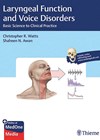
Laryngeal Function and Voice Disorders
This is a detailed, 323-page resource covering laryngeal function and voice disorders, basic science and clinical assessment. Spanning nine chapters, the authors cover the anatomy and physiology of phonation, survey of voice disorders, voice diagnostics, acoustic analysis, aerodynamic analyses, endoscopy...
Tinnitus and Sound Sensitivity Case Book
This book, as the title suggests, is full of case studies written by health wprofessionals involving patients who are experiencing tinnitus and/or sound sensitivity. There are 29 different case studies spanning both adults and paediatrics (though mainly adults). Each case...
Cartilage myringoplasty to treat patulous eustachian tube dysfunction
Patulous eustachian tube (PET) dysfunction, where the eustachian tube is abnormally opened at rest, is a notoriously difficult condition to treat. Symptoms can mimic symptoms of superior semicircular canal dehiscence: autophony, aural fullness, hyperacusis and breathing synchronous tinnitus. Treatment has...
Mobile apps for audiological screening
This article summarises the newly emerging mobile applications for audiological screening. The purpose is to try to reduce the time between individuals identifying a hearing problem and seeking help for it. These apps are gaining in popularity and recognition. The...
Hearing intervention to prevent dementia
People with hearing impairment have an increased risk of incident all-cause dementia proportional to the severity of loss compared to those with normal hearing. Treating hearing impairment may therefore serve to slow or prevent the onset of cognitive decline. This...
A new flap for the perinasal region
Perinasal defects are most commonly caused by tumour extirpation or trauma. There are a number of methods to reconstruct the defect, and the method chosen depends on the size of the defect and other patient considerations. When the defect is...
Postconcussion syndrome: weighing up the options on balance
Balance problems, dizziness, headaches, nausea, vomiting and sensitivity to light and sound, are a few of the symptoms which may be associated with post concussion syndrome (PCS), concussion symptoms which persist longer than 21 days. This article presents a physical...


