
You searched for "cancer"
Looking forward: incoming RSM presidents preview the year ahead
This November, Professor Simon Lloyd takes over from Patrick Axon as Otology Section President of the Royal Society of Medicine, and Professor Vin Paleri takes over from Michelle Wyatt as President of the Laryngology and Rhinology Section. Both incoming presidents share highlights from their programmes for the forthcoming year.The future of facial plastics and rhinoplasty
Interest in facial plastic surgery and in particular rhinoplasty has never been greater. From his wealth of experience in the field, Professor Palma outlines the potential problems of this increasing popularity and how they may be addressed, areas on which...The British Laryngological Association and Industry
In 2011 British laryngologists Martin Birchall and Guri Sandhu, assisted by ENT SpR Chad Al Yagachi, organised the first highly successful three-day international ‘Cutting-Edge Laryngology for the 21st Century’ conference at the Royal College of Surgeons in London. The Kenes...The ‘umbrella furling’ deflation technique for cuffed tracheostomy tube - a useful tip for an easier tracheostomy insertion
In this article, the authors describe a quick and effective technique to assist with the maximal deflation of a tracheostomy tube cuff prior to insertion, thus making the process easier with less chance of damage to the cuff and a...Endolymphatic sac surgery: controversial procedure for the treatment of Ménière’s disease
Landmark Paper: Thomsen J, Bretlau P, Tos M, Johnsen NJ. Ménière’s disease: endolymphatic sac decompression compared with sham (placebo) decompression. Ann N Y Acad Sci 1981;374:820-30. Of all of the chapters in the Landmark Papers book, the chapter that discussed...Developing ENT and audiology services in Southern Africa (Part 2)
In the last issue of ENT & Audiology News, we heard from retired Professor Christopher Prescott on the challenges faced and progress made made locally to address the inequity and inequality of access to ENT and allied health professional services...Covid-19 Tips and insights
The following blog articles have been kindly provided by Eric Levi. For more from Eric Levi, visit https://ericlevi.com/blog/ COVID19 affects everyone Posted on 01/04/2020 by Eric Levi Here’s a report from the Center for Disease Control and Prevention looking at...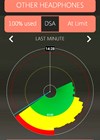
How loud is too loud? Smart ways to monitor noise exposure through your headphones
As an audiologist, an increasingly common concern patients have is noise exposure from their headphones and how it will impact their hearing over time. It’s a legitimate worry considering the average adult is streaming audio content on their mobile devices...Otodynamics' OTOPORTcompletes a mission on the International Space Station
For the last few years, the International Space Station has been home to an Otodynamics’ Otoport Advance handheld clinical OAE instrument.Observations and ruminations - a week of collaboration and learning in Ghana
A week of surgical exchange in Ghana reveals the power of collaboration, resilience and mutual learning in advancing global ENT care. Isabelle JM Williams. Isabelle’s perspective It was a Saturday lunchtime at Heathrow airport, terminal 3. Professor David Howard, Miss...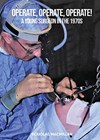
Operate, Operate, Operate! A young surgeon in the 1970s
The book is a memoir of Douglas MacMillan’s experiences as a young surgeon in the 1970s. MacMillan describes his journey from medical school to training and becoming a consultant ENT surgeon. He shares stories about his challenges as a young...


