
You searched for "management"
How sight shapes sound: cross-modal plasticity and cochlear implantation
Visual cues support auditory recovery after cochlear implantation, with evidence showing cross-modal plasticity enhances speech perception and rehabilitation outcomes. Traditionally, clinical guidance around cochlear implantation has been shaped by a key concern: that reliance on visual communication, particularly speechreading, might...Should human beings sleep in the prone position?
Are we poised for a ‘sleep prone’ campaign to reduce nocturnal apnoeas? Prof Armin Moniri presents a fascinating account of how sleeping position can affect obstructive sleep apnoea. Inspired by sleeping position of other mammals, a new mattress and pillow...New sites needed for STARFISH trial
The STARFISH Trial is aiming to recruit 525 participants with sudden hearing loss from 75 ENT departments treating idiopathic sudden sensorineural hearing loss (ISSNHL).Global Grand Rounds Webinar
Professor Maria Suurna, International Coordinator of the American Academy of Otolaryngology – Head and Neck Surgery Foundation (AAO-HNSF), is hosting a complimentary Global Grand Rounds Webinar on Saturday 26 July, 9.00 – 10.30am.
Transoral Laser Microsurgery of Benign and Malignant Lesions
Published in 2016, this is a textbook that I have cited and recommended in a number of talks on transoral laser microsurgery (TLM). The content and layout is very similar to that of Steiner and Ambrosch’s Endoscopic Laser Surgery of...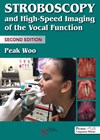
Stroboscopy and High-Speed Imaging of the Vocal Function – Second Edition
When I was asked to review this book, I was really looking forward to receiving it and eagerly awaited the postman on a daily basis until it arrived. Needless to say, it did not disappoint. The author, Peak Woo, is...
IV dexamethasone versus LA infiltration during paediatric tonsillectomy
Postoperative nausea and vomiting following tonsillectomy is important to control for improved oral intake and satisfaction following surgery. Optimal management is still debated. This team from Beirut conducted a randomised double blind clinical trial comparing the effect of intravenous dexamethasone...
Variations in obstructive level with increasing depth of sedation in DISE
This study highlights some of the controversies surrounding DISE (Drug Induced Sedation Endoscopy, or otherwise known as sleep nasendoscopy in the UK). On one hand it provides some evidence that the BIS (BiSpectral Index), recordings of patients while they are...
Endoscopic myringoplasty: a promising alternative to microscopic surgery
Endoscopes have revolutionised otitis media surgery in recent years and are increasingly used in the surgical management of cholesteatoma, sinus tympani pathology and facial nerve surgery. Despite this, the development of endoscopic myringoplasty and how this compares to its microscopic...
Early injection laryngoplasty for iatrogenic vocal fold movement impairment – a safe and effective treatment
This Ed’s Choice examines the role of early injection laryngoplasty on swallowing dysfunction and is one of a few studies available in the literature. Research on early injection laryngoplasty has been predominately focused on voice and reducing the risk of...
Vocal fold motion impairment following intubation – how likely is it to recover?
Ed’s Choice reviews a timely paper investigating prolonged intubation on vocal fold motion. The current scientific literature is dominated by studies examining COVID-19 and its widespread effects on health and healthcare delivery but will be old news by the time...


