You searched for "assistive"
A new approach to workplace hearing conservation
The traditional approach to managing workplace noise has failed - how can we better protect our nation’s hearing using smart hearing protection? Occupational noise-induced hearing loss (ONIHL) is the most common occupational health condition in the world and the most...In conversation with Liam M Flood: Middlesbrough (M for Michael? ...nope, Martin!)
Liam Flood. With a name such as Liam you must have some ‘Irish blood’? Where does your family come from? Tell us more? (What did your old man / mum do?) Some Irish blood? Those who know me well would...Practical training courses for otolaryngology trainees
In this extended Trainee Matters, it’s a pleasure to present a trio of excellent articles with a theme of practical training courses for otolaryngology trainees. Miss Rachel Edmiston, Professor Nirmal Kumar and colleagues have written a valuable guide to setting...The Business of Audiology
Brian J Fligor, PhD, PASC, President, Audiologist-in-Chief, Tobias & Battite Hearing Wellness, Boston, Massachusetts, USA. DrBrian@tobias-battite.com When it works well, capitalism is an excellent driver of innovation, generation of wealth, and adherence to best practices resulting in optimal outcomes. When...WCA Innovation Prize
At the World Congress of Audiology in Paris in September, a special prize was announced for the best innovation that addresses an unmet medical need. Candidates were selected from domains such as clinical trials or medical devices, and given five minutes and five slides to pitch in front of an international jury of researchers, clinicians, economists and industry professionals.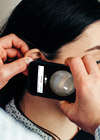
Connecting healthcare
In recent years, there has been a definite shift toward the acceptance and use of smartphone technology in the delivery of healthcare. Within the fields of ENT and audiology, there is considerable appeal in the portability, simplicity, affordability, and connectivity...
JAMA Network Reader
Accessing content from The Journal of the American Medical Association (JAMA) and its nine specialty journals (including JAMA Otolaryngology – Head & Neck Surgery) has now become a bit easier, thanks to an app designed for viewing JAMA articles on...