
You searched for "technology"

Symptom Oriented Otolaryngology: Head & Neck Surgery – Three Volume Set
Symptom Oriented Otolaryngology is a three-volume set covering an extensive range of symptoms in otorhinolaryngology, head and neck surgery. The editorial team of Randal Payne Morton, Zahoor Ahmad and Malcolm Giles from New Zealand, have been supported by an illustrious...Why and what should hearing care professionals know about cognitive impairment and dementia
Good reasons to care about cognitive impairment and dementia in audiology If asking people what they fear most when getting to old age, it is cognitive decline that is named most often. This comes with the expectation of limitations in...ENT In this issue...Landmark Papers that Defined ENT and Audiology
In 2018, I compiled a book with the title Landmark Papers in Otolaryngology. The book was inspired by the ENT department journal club that regularly took place in a local Norwich pub, and it discusses 99 of the most cited papers in the ENT and audiology literature.Top ten research priorities for dementia and hearing loss
Researchers from Nottingham working with Alzheimer’s Research UK and RNID (the Royal National Institute for Deaf People) asked people living with these conditions, as well as their families and clinicians, what future research would have the biggest impact for them.
Quality of life after cochlear implantation in the older population
Cochlear implants (CI) have been increasingly adopted in older adults with severe to profound hearing loss as a result of the growing and ageing world population. There is much interest in the cost-effectiveness and quality of life in CI users....Congratulations on being elected BRS President
Mr Raj Bhalla has been elected next President of the British Rhinological Society following a recent vote by the membership. He works as a Consultant Rhinologist at both Manchester Royal Infirmary and Salford Royal Hospital. He will take up...Congratulations Prof Hesham Saleh
Hesham Saleh has been awarded the title of Professor of Practice in Rhinology at Imperial College London in recognition of outstanding contributions to education, leadership...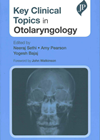
Key Clinical Topics in Otolaryngology
I am a ST6 registrar and, to review this book, I decided to use it as my primary revision guide for the exam and it did not disappoint. This book has all the hallmarks of a great adjunct for the...
Rhinology and 3D printing
3D printing has increasing applications in rhinology, for instance to create patient-specific preoperative models for procedure planning, including designing a template for reconstruction planning following tumour resection, patient consultation and customised prostheses. The authors focused their review on the role...


