
You searched for "paralysis"
British Laryngological Association – Cutting Edge Laryngology 2024
It’s always good to know which conferences are the best for trainee experience. Here, Valerie Kim reveals why BLA Cutting Edge was so worthwhile. I had a wonderful time attending the British Laryngological Association (BLA) – Cutting Edge Laryngology Conference,...Voice analysis
Traditionally voice analysis has been done by ear at a subjective auditory-perceptual level. The three main characteristics of voice are: pitch – normal for age and gender, too high or too low; loudness – normal, too high or too low;...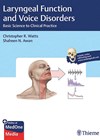
Laryngeal Function and Voice Disorders
This is a detailed, 323-page resource covering laryngeal function and voice disorders, basic science and clinical assessment. Spanning nine chapters, the authors cover the anatomy and physiology of phonation, survey of voice disorders, voice diagnostics, acoustic analysis, aerodynamic analyses, endoscopy...
Core or fine needle assessment in lymphadenopathy and salivary gland tumours
This paper from the Republic of Korea analyses 278 patients retrospectively, 112 of which underwent fine need aspiration and 166 core needle biopsies. Eleven patients had indeterminate fine needle aspiration cytology, six of whom had an additional core biopsy. The...
TIVA in FESS: a meta-analysis
This meta-analysis is from Rochester, New York, and aims to add more evidence for the use of TIVA in endoscopic sinus surgery (FESS) to arm rhinologists keen for a quick, bloodless FESS in the discussion with anaesthetists who prefer inhalation....
Analysing videofluroscopy: does it matter how it’s done?
Videofluoroscopy, as a tool that assesses the process of swallowing, has transformed our understanding of dysphagia. Clinicians can observe the biomechanics of a bolus moving from the oral cavity through the pharynx and oesophagus and into the stomach. Over the...Call for consistent cochlear implant guidelines
A new global task force aims to create ‘living guidelines’ to set the standard of care for adult cochlear implantation (CI).
The case of the women and the words: intensive therapy can help many years post stroke
Aphasia, a language impairment impacting on a person’s ability to speak, understand, read and write, is most commonly caused by a stroke. Speech and language therapists are trained to work with people with aphasia, often aiming for restitution and rehabilitation...
The association of frontal recess anatomy and mucosal disease on the presence of chronic frontal sinusitis: a computed tomographic analysis
Ostial obstruction is a primary pathophysiological mechanism contributing to sinusitis, which can be caused by anatomical variations, mucosal inflammation or both. This retrospective case series aimed to identify anatomical factors and inflammatory areas relating to chronic frontal sinusitis on nasal...


