
You searched for "reinnervation"
Medical racism and the surgical ‘correction’ of the nose in Brazil
Anthropologist Professor Carmen Alvaro Jarrín has conducted extensive research into plastic surgery practice in Brazil. Here, she explains why social and cultural ideas about race may shape rhinoplasty objectives for patients and surgeons in the country. Health professionals worldwide are...KARL STORZ Strengthens its ENT Portfolio with the Acquisition of AventaMed in Ireland
The family-owned medical technology company KARL STORZ announces the acquisition of 100 percent of the shares of AventaMed DAC, an Irish medical technologies company.New international collaboration: Young Otolaryngologists of IFOS – ‘YO-IFOS’
The Young Otolaryngologists of IFOS, founded in Paris in 2017, has an ambition to fulfil four key missions at an international level: education, research, networking and congress-related activities. Kate Stephenson tells us more about this exciting initiative. During the recent...
Retrospective review of paediatric salivary gland tumours
As is the case with adults, primary tumours of the salivary glands in children comprise a heterogeneous collection of different histological types. This paper presents a retrospective review of primary salivary gland tumours in children treated over the course of...Lies, damned lies and relative risk reduction
Chris Potter has a thing or two to say about the use of statistics and, in doing so, he takes us to a Friday night steak house that is prone to airway disasters and on a short tour of his...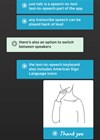
Hi There Solutions
The COVID-19 pandemic has introduced a multitude of lifestyle challenges, and communication has been no exception to this. Not only have plexiglass barriers and masks impeded the way we verbally interact, but the transition to more frequent virtual communication has...The art of hearing: a conversation between silence and colour
The image on the ENT & Audiology News September/October 2025 cover is not merely an artwork – it is a conversation. A conversation in colour. A dialogue between silence and sound, between science and emotion. It is part of a...Shifting paradigms – how a visionary can change a specialty
The Tarabichi-Stammberger Ear and Sinus Institute came about because of a close working relationship and friendship between two senior figures in the specialty. Professor Muaaz Tarabichi tells us the story. My first meeting with Heinz Stammberger was in 1988 in...Academic Achievement Award for De Wet Swanepoel
Congratulations to Daniël Christiaan De Wet Swanepoel for being one of the recipients of the University of Pretoria’s 2023 Academic Achievement Awards.14th Balkan Conference of ORL & HNS
Join us for one of the most important gatherings of ORL and Head & Neck Surgery professionals from across the Balkans and beyond. A meeting of science, innovation, and collaboration, held for the first time in Prishtina
Bilateral transposition lip flaps of central upper lip defects
This case series brilliantly explains a novel technique to repair central upper lip deformities at a Moh’s reconstruction referral practice. Most of the current treatment operations advocate a secondary surgery in order to fully restore the philtral columns and the...


