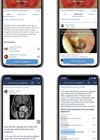
MedShr is an international, award-winning medical education platform that has been created for healthcare professionals (HCPs) to discuss, learn, teach, and (to a lesser degree) network with one another. MedShr was founded in 2014 by Cardiologist Dr Asif Qasim and,...
The Fellowship in Clinical Leadership programme, more commonly known as the ‘Darzi Fellowship,’ commenced in 2009. It was designed to provide junior doctors at the registrar level with postgraduate training in clinical leadership and change management in order to develop...
Challenges The first challenge is to agree what we mean by the term leadership because there are many different ways in which the term is used. What is, however, a consensus is that the key distinction between leadership and management...
Victoria Possamai, Consultant Paediatric ENT Surgeon, Evelina London Children’s Hospital. 30 August 1977 – 6 December 2024 It is with great sadness that we reflect on the loss of our wonderful colleague and friend Victoria ‘Vikki’ Possamai, Consultant Paediatric ENT...
Thinking of going back to university to do further study? We hear from one audiologist who identified an area of further study and specialisation and took the leap. My career in audiology began in 2003 through a traditional route in...
One of the aspects of tinnitus that drew me into it becoming a major theme of my clinical and research work was how little work had been done when I began to see patients in the mid 1980s. This struck...
As these things sometimes happen, our first conversations about Social Enterprise happened pretty much by chance and in our case were a by-product of discussions about a new department having outgrown the current one. The National Health Service (NHS) Audiology...
Audiology has changed dramatically in recent years. Cochlear implants and high power hearing aids have made hearing really available to children with essentially any degree of hearing loss. Those of us who have been in the field for a long...
The following case study reports on the experiences of a hearing impaired National Health Service (NHS) patient who was given Bluetooth accessories as part of a study into their benefits when used with hearing aids [1]. The name of the...
A James Lind Alliance Priority Setting Partnership has been formed to help shape the future of research into mild-moderate hearing loss. Who is the Priority Setting Partnership? The Partnership brings together Hearing Link, Action on Hearing Loss, the British Society...
Hearing loss and language development Down syndrome (DS) usually arises due to trisomy 21 and is associated with intellectual disability and risks of developmental delays and difficulties, including hearing loss. Hearing loss is common in children with DS [1]. In...
Rilana Cima and Haúla Haider introduce an ambitious pan-European collaboration that seeks to establish guidelines for achieving best clinical practice for managing, assessing and treating patients with different tinnitus profiles. Tinnitus heterogeneity is the major reason for inconsistent results in...