You searched for "Transoral"
Young ESPO - calling all young paediatric otolaryngologists
Young ESPO welcomes all junior otolaryngologists with a special interest in paediatrics to become part of a community of training doctors, and share clinical and research knowledge on paediatric ENT!Branchio Oto Renal syndrome
Branchio Oto Renal Syndrome (BOR) is an autosomal dominant disorder with branchial, otologic and renal manifestations. The presence of clinical signs varies among and within affected families. Three causative genes for BOR syndrome have been reported thus far: EYA1, SIX1...
Can obstructive snoring affect the snorer’s ears as well?
Patients with obstructive sleep apnoea (OSA) often show severe nasal obstruction, chronic sinusitis and/or a deficit of nasal mucociliary clearance with nasopharyngeal stagnation of secretions possibly predisposing to eustachian tube dysfunction (ETD). This clinical prospective study investigates ETD, nasal resistance...
Are cardiovascular risk factors associated with hearing loss?
Cardiovascular disease (CVD) risk factors are associated with microvascular damage that can impair molecular transport across capillary walls and cause inflammation and oxidative stress that may damage cochlear structure and function. This study determined, among a population-based sample of Canadian...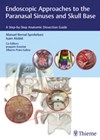
Endoscopic Approaches to the Parsanasal Sinuses and Skull Base
This is an excellent book to cover the endoscopic approaches to the paranasal sinuses and skull base with a step-by-step anatomic dissection guide. The editors are a group of eminent skull base otolaryngologists and neurosurgeons in Barcelona, Spain, and they...
Maturation of BC attenuation
The aim of this study was to clarify the reason for differences between bone-conduction hearing in adults and infants. The authors investigated how the sound pressure level in the ear canal changes depending on the bone-conduction transducer placement. By using...Five gold medals for ENT surgeon
ENT&Audiology News history section editor, Katherine Conroy, represented Great Britain at this year’s World Transplant Games. Athletes from 51 countries participated in multiple sports from 18 - 22 August in Dresden, Germany.Military otolaryngology and its impact on civilian trauma care
Over the centuries, military conflicts and wars have caused both death and injuries and led to improvements in the care of the combat wounded. Military otolaryngologist-head and neck surgeons have been at the forefront of these developments and advances. War...
Does middle turbinate resection affect olfaction in endoscopic transsphenoidal surgery?
The middle turbinates (MT) are sometimes partially resected during endoscopic transnasal transsphenoidal pituitary surgery to improve surgical access. Some outfracture the middle turbinates instead. This article presents results of the first prospective randomised study, investigating the effects of such surgery...Recurrent respiratory papilloma treatment in the office
In this interesting new article, Markus Hess and Susanne Fleischer describe their technique for managing recurrent laryngeal papillomatosis in an outpatient setting using channelled endoscopes. The recurrent respiratory papillomatosis (RRP) of the larynx is a chronic HPV-associated viral disease. Clinical...