
You searched for "implantation"
Musical hallucinations and audiology
Many of us will have been stuck with an ‘earworm’ for a day but consider how it would be to have that earworm stuck on repeat, possibly forever. Drs Lauw, Blom and Coebergh review the current literature on musical hallucinations...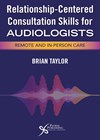
Relationship-Centered Consultation Skills for Audiologists: Remote and In-Person Care
With the rise in tele-audiology services alongside changes in hearing aid technology, there is an added importance in providing our patients with the care they need within our clinical settings and remotely. This book highlights the key skills to be...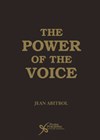
The Power of the Voice
An initial glance at the table of contents and layout of Jean Abitbol’s book, The Power of the Voice, might lead one to assume that it is heavy on style but light on substance. A closer reading proves this to...In conversation with Professor Gerry O’Donoghue
On the occasion of his retirement from the Nottingham Auditory Implant Programme, we discuss his pioneering work in cochlear implantation and the challenges involved. ENT News author picture, 1993. Why did you choose a career in ENT? I started off...Big data and the future of cochlear implant aftercare
With a million people using cochlear implants worldwide, the time is right for us to harness this vast data for patient benefit. Every day, cochlear implant (CI) processors quietly collect data: how long they’re worn, how often users switch programs...Breaking barriers in Uganda: the story of Elaine Mukaaya
More than 9% of sub-Saharan Africa’s one billion people live with disabling hearing loss, with children having among the highest rates of childhood hearing loss in the world [1]. Sadly, in concordance with the inverse care law – proposed by...
Where is that sound? Not every hot tub is a jacuzzi
Evidence suggests that the incidence of sound sensitivity and general noise intolerance is increasing. Studies have suggested that the incidence of hyperacusis is between 8% and 15.2% of the adult population. There is a correlation between the prevalence of hyperacusis...Management considerations for limited usable hearing unilaterally in the paediatric population
How can we best support children with limited usable hearing in one ear? This article discusses the latest approaches. Limited usable hearing unilaterally (LUHU) is an emerging term and has been suggested to replace the historical term ‘single-sided deafness (SSD)’....


