You searched for "pharyngeal"
KTP laser in the office
KTP laser surgery offers a new way of selectively targeting microvasculature within laryngeal lesions and leaving normal surrounding tissues like epithelium and lamina propria intact – and thus preserving physiological phonation. This kind of selective photoangiolysis can be performed in...Soluvos Medical is looking forward to the congress season
The Soluvos team is looking forward to finally meeting readers in person. It has been such a long time! The team will be at the following eventsPeter McKelvie 1932 – 2026
Peter McKelvie, an outstanding head & neck surgeon and oncologist, died on 6 February aged 93. He suffered a spontaneous subdural haemorrhage. British otolaryngology has lost the most remarkable talent of his generation. He combined a prodigious intellect with effortless...ENT UK Research Showcase 2025
Simon Goldie, Univeristy Hospital SouthamptonThe Hallam Conference Centre, in central London proved an excellent choice of venue, offering modern facilities and warm hospitality. The meeting was superbly organised by the ENT UK team, with particular recognition to Pam, whose efforts...ECHNO 2025
Jonathan Fussey, Consultant ENT Head & Neck Surgeon, University Hospitals BirminghamThis year marked the 11th European Congress on Head and Neck Oncology, held in the impressive Beurs Van Berlage in the centre of Amsterdam. Delegates from around the world convened...13th Winter Days of Laryngology
Dr Samuel Hofmann, ENT/Laryngologist, Lindenhofspital/Praxis Länggasse, Bern, Switzerland and Mr Philippe F de Z Bowles, Consultant ENT Surgeon/Laryngologist, University Hospitals Sussex NHS Foundation Trust, Brighton, UK. This successful meeting, hosted once again at L’Hôtel de L’Étrier in the Swiss Alps,...Office-based PRP injection for benign vocal fold disorders
Awake transnasal laryngeal injection has become globally popularised. This article discusses autologous plasma as a regenerative alternative to synthetic materials. Regenerative therapies are increasingly being explored across a range of specialties. Among these, platelet-rich plasma (PRP) has seen the widest...
Scary Cases in Otolaryngology
When I was first presented with the Halloween-like graphic that is displayed on the cover of this 230-page book, I wondered what scary stories may lie ahead. To my delight, by the time I’d turned over the first few pages,...
Preoperative imaging for thyroid cancer according to 2015 ATA guidelines
The 2015 American Thyroid Association (ATA) management guidelines for adult patients with thyroid nodules and differentiated thyroid cancer suggest that thyroid sonography with survey of the cervical lymph nodes should be performed in all patients with known or suspected thyroid...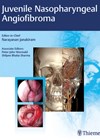
Juvenile Nasopharyngeal Angiofibroma
This book was first published in 2017 in India and PJ Wormald is one of the Associate Editors. It consists of 16 chapters with exceptional surgical photographs, as well as scans of different imaging modalities and illustrations. It is a...
Historia Otorhinolaryngologia: Volumen Primum
Historia Otorhinolaryngologia is the ultimate coffee table book for any otolaryngologist. Underneath its elegant cover, there are hundreds of fascinating pictures to flick through, ranging from ancient texts and religious icons to historic specimens and photographs. However, on closer inspection...