
You searched for "genetic"

Does speech and language therapy provide value for money?
Within the NHS (and outside it), managers, commissioners and consumers will consider value for money as a key component in making a decision about whether to pay for speech and language therapy (or any other service for that matter). Yet...Management considerations for limited usable hearing unilaterally in the paediatric population
How can we best support children with limited usable hearing in one ear? This article discusses the latest approaches. Limited usable hearing unilaterally (LUHU) is an emerging term and has been suggested to replace the historical term ‘single-sided deafness (SSD)’....
Drug eluting stent vs INCS for CRS
A prospective, randomised study from Finland to compare a drug eluting stent (DES) and intranasal corticosteroids (INCS) in 63 patients as assessed by SNOT-22, VAS, endoscopy, CT and rhinometry pre-treatment, at three and six months post treatment. Recruitment was over...New Procedure to Revolutionise Paediatric Ear Surgery Performed for the First Time using AventaMed Solo + Tympanostomy Tube Device (TTD)
AventaMed DAC, a Cork, Ireland company announced the first use of its Solo+ TTD in a paediatric patient while the patient was awake.Detecting postoperative cholesteatoma with diffusion weighted magnetic resonance imaging
Middle ear cleft cholesteatoma is an inflammatory disease that erodes local bony structures and can cause otorrhea, hearing loss, vertigo and intracranial complications. It is usually treated with surgery, typically canal wall up (CWU) or canal wall down (CWD) surgery....Destination unknown
We as doctors do not always know the answer. Associate Professor Jacqueline Allen guides us through the importance of acceptance of this uncertainty and its complex mental journey. She highlights that, as clinicians, we must embrace the unknown and be...Interview with Andrew Swift
ENT UK has a central role in guiding and supporting ENT surgeons. Our editor Declan Costello caught up with Andrew Swift, who has just taken over the presidency of the organisation.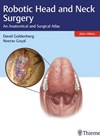
Robotic Head and Neck Surgery: An Anatomical and Surgical Atlas
I was excited to receive and review this book. Unfortunately I was disappointed to discover the strange paperback spirally bound exterior, which the publisher’s website states makes it robust. It looks anything but robust and, as an intended textbook to...
What is the evidence for duration of antibiotic prophylaxis in head and neck free-flap cases?
The topic of this systematic review is one which is commonly heard in discussions between microbiologists and head and neck surgeons – what is the evidence for antibiotic prophylaxis in clean-contaminated free-flap cases, and crucially, how long should antibiotics be...
A future for unilateral deafness
Every year, we see several patients struggling with irreversible unilateral hearing loss that is non-responsive to sound amplification. This article emphasises that clinicians should not underestimate the functional and psychological impairment single-sided deafness can have on an individual, even though...
Do it like a techy: telepractice in SLT for people with Parkinson’s disease
Parkinson’s disease (PD) is the second most common neurological condition in Australia, and communication difficulties are reported by 90% of people with the condition. Unfortunately, not all people with PD have access to speech and language therapy services due to...


