You searched for "SFORL"
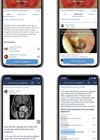
MedShr-ing is caring
MedShr is an international, award-winning medical education platform that has been created for healthcare professionals (HCPs) to discuss, learn, teach, and (to a lesser degree) network with one another. MedShr was founded in 2014 by Cardiologist Dr Asif Qasim and,...New challenges ahead for the hearing aid industry
Technological advancements empower the world to hear In an increasing age of connectivity, the hearing aid industry is headed into new territory. Previously, to wear hearing aids was simply a mark of ageing. Now hearing aids are smarter and, as...In conversation with Julian Hamann
In recent years, there has been a definite shift toward the acceptance and use of smartphone technology in the delivery of healthcare. Within the fields of ENT and audiology, there is considerable appeal in the portability, simplicity, affordability, and connectivity...Hearing, tinnitus and hyperacusis in the arts
Hearing loss, tinnitus and hyperacusis are discussed by David Baguley from the unique perspective of their depictions in literature, music, film and paintings. This article provides unusual and invaluable reflective opportunities for the patient-centred clinician! Audiologists and otologists understand hearing...Harnessing social networks - connecting the global paediatric ENT community
Hannah Burns radiates enthusiasm and commitment to improving communications across geographical and political boundaries. When the pandemic hit in 2020, she took to social media to share her thoughts and offered a forum for colleagues. In the midst of the...Reza Band<sup>®</sup> UES Assist Device
Members of the ENT and Audiology News team spoke to Rose Henrichs, Solutiones Vobis and Nick Maris, CEO and President of Somna Therapeutics about the Reza Band device. Nick Maris. Rose Henrichs. What is your involvement in Reza Band? And...Where ART meets Science: The Silence You Can Hear
Some moments have a sound you don’t hear with your ears but feel with your entire being. The artwork DS21008 (200 cm x 120 cm) captures such a moment: a Sunday morning in Maastricht, where the river Maas reflects the...Demystifying laryngology in the era of examination and collaboration
In the field of laryngology, perhaps more than in any other area of ENT, there has been a philosophical shift (as well as a technological one) in the approach of clinicians caring for patients. Albert Merati explains. Progress in laryngology...The first nine months: why early hearing matters more than ever
Why 1-3-6 and 9? They are arguably crucial intervention stages. Here, new science is explored which weaves together the threads of early intervention. Imagine a newborn gazing at their caregiver’s face, hearing their voice and feeling the rhythm of their...Soundscapes of Zimbabwe: healing a nation one ear at a time
We hear about the life, vision and legacy of Dr Clemence Chidziva — the surgeon transforming ear and hearing care into a new wonder of Zimbabwe. Dr Clemence Chidziva. Tucked in the heart of Southern Africa, landlocked and bordered by...Across the pond: a tale of two fellowships
Where in the world is Halifax? Many outside of Canada have never heard of the Maritime Canadian town of Halifax. Before leaving to start a year-long fellowship there, we both had to answer many questions from family and friends about...