
You searched for "conchal"
ENT UK Head & Neck Meeting
The ENT UK Head and Neck Evidence-Based Management Meeting focusing on malignancy of the nose and paranasal sinuses was held in the historic market town of York. The multidisciplinary approach required to manage this complex disease was reflected in the speaker lineup, with national representation from ENT, maxillofacial and plastic surgery, oncology, palliative medicine, histopathology and radiology.Educational audiologists: adding value, bridging gaps
Educational audiology provides a vital link between health and education by supporting children with hearing loss in educational settings. Joy Rosenberg presents an overview of the training route available in the United Kingdom. Students in lecture. Educational audiologists greatly enhance...Pathways for becoming an audiologist in the USA: Part 2. Academic and licensure requirements today
Part 1 of this topic is available here. Professor Hall reviews current requirements for practising audiology in the USA; audiologists must have a Doctor of Audiology degree from an accredited university programme and a licence in the state where they...Tackling information overload and retention – interactive multimedia videos for first-time hearing aid users
If you are an audiologist reading this article, how confident are you that all the information and advice that you offer your first-time hearing aid (HA) patients is understood, absorbed and then acted upon once they leave the comfort of...Cartilage conduction hearing aids: the third pathway for sound transmission and its application
Air-conduction and bone-conduction are familiar terms; now enter ‘cartilage conduction’. This new term offers a novel approach sound transmission. Hiroshi Hosoi explains the concept and proposes some future applications. The new sound pathway ‘cartilage conduction’ can provide various types of...Ida Institute tackles clinician burn-out
Founded in 2007, Denmark’s Ida Institute is dedicated to the health of people with hearing loss. Its new four-part course, however, is aimed at another group: the medical professionals whose jobs can compromise their own health.UK hears its first Week of Sound
A week of events on the themes of hearing health, the sound environment and musical expression will take place in Edinburgh, Scotland, from 16 to 20 October 2023.New Tinnitus UK report highlights critical gaps in tinnitus care
Tinnitus UK, the leading UK charity dedicated to supporting individuals with tinnitus, has published a comprehensive report, Ringing the Alarm: The tinnitus care crisis. It exposes alarming gaps in tinnitus care and professional training across the NHS and private audiology...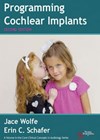
Programming Cochlear Implants - Second Edition
Wolfe and Schafer open their second edition with up-to-date images of brand-specific devices and show various configurations and customisations available to the recipient. For the audiologist, they introduce highly relevant topics such as polar plots for microphones, array types and...
Sex and the Nose
For regular attentive readers of our little magazine, JRY will need no introduction. The word ‘polymath’ barely does him justice: a Colonel in the Medical Corps with an MPhil in poetry and apparently one of the “50 coolest people in...
Show me the video: modelling for behaviour change
It is estimated that 2% of people in the United States have autism. The DSM 5th edition defines the autism spectrum diagnosis criteria as when an individual has social communication difficulties, as well as restrictive and repetitive behaviours. One intervention...


