
You searched for "intervention"
From the editor JulyAugust 2022
Declan Costello, MA, MBBS, FRCS(ORL-HNS), Editor, ENT & Audiology News; Consultant Ear, Nose and Throat Surgeon, Wexham Park Hospital, Slough, Berkshire, UK. E: d.costello@nhs.net One of the joys of attending meetings and conferences is the chance to catch up with...24th Congress of the Otorhinolaryngology Foundation (FORL)
Lilian Felipe, Associate Chair for the Doctor of Audiology Program, Lamar University Speech & Hearing Sciences, Texas, USAA Milestone Celebration in São Paulo In August, São Paulo hosted the 24th Congress of the Otorhinolaryngology Foundation (FORL), commemorating the Foundation’s 30th...Mindfulness based approaches to tinnitus management: meditations on a new approach
Psychological approaches to tinnitus There is now widespread agreement that an individual’s interpretation of tinnitus can determine how distressing they find it. If tinnitus is regarded as non-threatening then habituation normally follows. If, however, tinnitus is interpreted as threatening, habituation...
What Plug?
For decades, audiologists have encouraged people to wear hearing protection when they attend concerts. Traditionally, the most accessible options have been foam plugs, which have limited appeal due to their poor sound quality. Disposable foam plugs absorb high frequency sounds...Conspiring together: tinnitus and hearing loss
In this special feature, Nic Wray of the British Tinnitus Association and Zheng Yen Ng of The Ear Foundation present the results of their report into managing tinnitus for people with hearing loss. In September 2015, the British Tinnitus Association...3D printing and sustainability in audiology and ENT
As we try to avoid disposing of equipment that is still functional, we are challenged by company policies that make equipment ‘obsolete’ and no longer supported for repairs. One innovative solution is provided by 3D printing parts that are needed...Evidence based practice in paediatric audiology
Audiology, like most of the health sciences professions, has been working on integrating evidence-based practice principles since the mid-1990s [1]. Professional organisations and regulatory colleges have produced evidence-based clinical practice guidelines, disseminated them to audiologists and collaborated with practitioners to...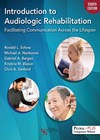
Introduction to Audiologic Rehabilitation: Facilitating Communication Across the Lifespan – Eighth Edition
The eighth edition of Introduction to Audiologic Rehabilitation is an invaluable and highly informative resource for anyone involved in the field of audiology and speech-language pathology. Designed to accommodate undergraduates, graduates and experienced clinicians alike, this textbook skilfully bridges the...
Does teaching affect patient satisfaction?
Teaching practice on real patients has several advantages in terms of lower costs and genuine clinical material but it is often a concern that using real patients for undergraduate teaching may result in patient dissatisfaction and many patients would prefer...
Military acoustic trauma: incidence and management
This is a retrospective study on the effects of acute acoustic trauma on the hearing thresholds of 225 military personnel. The main symptom after acute acoustic trauma due to firearm use was tinnitus. The authors consider it as the main...


