
You searched for "dissection"
The role of objective measures and imaging to optimise cochlear implant outcomes
Should we be using new or novel objective measures and imaging to assist with our cochlear implant patients? Debi Vickers and Shak Saeed describe current clinical techniques and present advances that have the potential to optimise outcomes. Introduction It is...A medical student’s perspective on the future of obstructive sleep apnoea management
Obstructive sleep apnoea remains an immensely challenging condition to treat. Many treatments have been used over the years, but no single management strategy has proven significantly better than the others. We hear about some technological innovations in the field of...AURITEC presents AT2000 with implant integration
AURITEC AT2000 is a state-of-the-art audiometer that stands out for its exceptional capabilities, especially thanks to its unique integration with cochlear implants. Designed for both clinical and research settings, the AT2000/AT-research family offers a comprehensive range of features for auditory...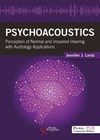
Psychoacoustics: Perception of Normal and Impaired Hearing with Audiology Applications
The field of psychoacoustics and the practice of audiology have always been curious bedfellows. In the clinic, we commonly assess patients’ hearing ability through pure-tone detection, a classic psychoacoustical phenomenon, but just one of the many, many ways in which...Surgeons and swearing
We will all know colleagues who have raised the act of swearing to an art form; just as Malcolm Tucker in The Thick of It could cut a workmate in half with a well-placed swear word, surgeons can be equally...
Cartilage myringoplasty to treat patulous eustachian tube dysfunction
Patulous eustachian tube (PET) dysfunction, where the eustachian tube is abnormally opened at rest, is a notoriously difficult condition to treat. Symptoms can mimic symptoms of superior semicircular canal dehiscence: autophony, aural fullness, hyperacusis and breathing synchronous tinnitus. Treatment has...
What is balloon eustachian tuboplasty (BET)?
Eustachian tube dysfunction (ETD) is the result of a combination of factors that interfere with the mucosal functional or cartilaginous structures. Failure to open the eustachian tubes can cause aural pain, pressure in the ears, muffled hearing, crackling/popping sounds in...
Do intranasal corticosteroids resolve eustachian tube dysfunction?
Eustachian tube dysfunction is a widely prevalent problem, both in children and adults. In many ways, it affects the quality of life in terms of earaches, feeling of blockage and variable hearing. Use of intranasal corticosteroids is customary but whether...
Attitudes towards leisure noise
Noise is a very common reason for hearing loss. The question is whether young adults realise the danger of developing a noise related hearing loss. The aim of this study was to evaluate the attitude towards leisure noise and noise...
Hearing protection and hearing loss
This study examined the interaction of hearing protection for noise reduction and hearing loss with speech recognition performance. Forty five subjects with four hearing loss profiles were fitted with two different level dependent hearing protectors (circumaural and inserts) in two...
All present and correct
You have ear protection, but are you using it properly? What are the risks over time? The design of standard earplugs has changed a lot in a decade. Earplug attenuation did reduce over time but still remained safe, however the...


