
You searched for "collaborative"
Guidelines on COVID-19 published by Asia Pacific Laryngology Association (APLA)
Due to a vast geographical spread with diverse socio-economic conditions in the Asia Pacific countries, APLA Founding Chair, Vasant Oswal, President, David Lau, and Secretary, Vyas Prasad decided to publish guidelines on COVID-19 in the form of an ‘International Consensus',...
Practical Neurotology and Skull Base Surgery
The introduction describes this text as being useful for a wide readership including the medical student, physician assistant, nurse practitioner and physical therapist dealing with dizziness. I would be of the opinion as indicated in the preface that this is...
Pediatric Endoscopic Endonasal Skull Base Surgery
Published in 2020, this book, edited by professors of neurosurgery and otolaryngology, approaches the narrow field of paediatric endoscopic skull base surgery with a wealth of knowledge and expertise that the authors have achieved practising in adult and paediatric joint...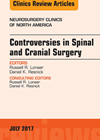
Surgical approach to trigeminal neuralgia
This article provides a summary of the operative techniques available for treating patients with trigeminal neuralgia who have medication resistant pain or medication intolerance. Microvascular decompression is performed via suboccipital craniotomy to find and resolve the underlying nerve compression. The...
A review of topical treatments for chronic rhinosinusitis
Topical nasal treatment is considered the mainstay treatment for chronic rhinosinusitis (CRS). The authors reviewed the effectiveness of saline irrigation, topical corticosteroids, topical antibiotics and topical antifungals in the treatment of CRS. Large volume saline irrigation was found to be...
Long-term results of injection laryngoplasty with polydimethylsiloxane (Vox) for unilateral vocal fold paralysis
Polydimethylsiloxane (PDMS) is widely used for vocal cord injections to treat patients with a vocal cord palsy. It is commercially available as the Vox implant system. Alternative compounds that can be employed include hyaluronic acid and calcium hydroxyapatite (Radiesse Voice)....
Transnasal endoscopic choanal atresia surgery
Surgery is currently the only definitive treatment for congenital choanal atresia (CCA). There are various surgical approaches including transnasal, transeptal or transpalatal. The authors propose that the preferred option is transnasal endoscopic choanal atresia surgery (TECAS) and set out to...
To drain or not to drain
These two separate papers neatly tie together the same ideas. The first, a retrospective study of 107 patients and 116 procedures over a 10-year period who underwent a CSF leak repair, 82.2% without a lumbar drain and 17.8% with. The...
Results of hypoglossal-facial nerve anastamosis techniques for facial palsy
Preserving facial nerve function is of prime importance in acoustic neuroma surgery. A comprehensive knowledge of anatomy, experience and surgical precautions can reduce the incidence significantly. Important considerations are when and how to repair if injury occurs. Several options include:...
Anterolateral thigh cutaneous flap or radial forearm free flap for tongue defect reconstruction?
Free flap reconstruction is the gold standard in tongue reconstruction, aiming to restore function such as swallowing, cosmesis and speech. The anterolateral thigh cutaneous flap and the radial forearm free flap are among the most popular free flaps used for...
Outpatient closure of CSF leaks: a good idea or a step too far?
After day-case septoplasty, day case thyroidectomy, now day case CSF leak repair – has the pendulum moved too far? The authors put forward a convincing case for what, only 10 years ago, would have sounded like a provocation. They quote...


