You searched for "audiologists"
From surgeon to scholar: the remarkable life of Philip Stell
Professor Philip Stell was an extraordinary man: following an astonishingly illustrious career in ENT, he excelled as a medieval historian. With the Philip Stell Prize due to be awarded in May, his friend Pat Bradley looks back at his remarkable...Murder most foul, strange and unnatural
Hamlet, written by William Shakespeare at the very beginning of the 17th century has definite otological interest. The whole play is about young Prince Hamlet’s revenge for his father’s murder. The king is killed by Hamlet’s wicked uncle, who then...History of ENT - Murder most foul, strange and unnatural
Hamlet written by William Shakespeare at the very beginning of the 17th century has definite otological interest. The whole play is about young Prince Hamlet’s revenge for his father’s murder. The king is killed by Hamlet’s wicked uncle, who then...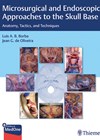
Microsurgical and Endoscopic Approaches to the Skull Base
This is a comprehensive book which covers both microsurgical and endoscopic techniques. The introductory section focuses on setup for microsurgical and endoscopic techniques, with images to support this. A detailed description of instruments is also provided, which would be extremely...
How well are we managing epistaxis cases?
Epistaxis constitutes 34.5% of all emergency admissions to otolaryngology departments nation-wide. Presently there are no detailed consensus guidelines for this commonest emergency, and there is tremendous variation of practice. Quite often, non-ENT trained doctors manage this emergency. This paper reviews...
Significance of abnormal retropharyngeal nodes in head and neck cancer
Abnormal retropharyngeal lymph nodes (RLN) have prognostic relevance for patients with oral, oropharyngeal or nasopharyngeal squamous cell carcinoma (SCC). However, consensus on the evaluation and management of abnormal RLN in these patients is lacking. The authors of this paper provided...