You searched for "COVID"

1599 results found

Using telehealth to engage teenagers

Can we use a teenager’s love of gadgets to re-engage them with their hearing technology? Gwen Carr reports on an innovative use of telehealth to support teenagers who are no longer visiting their hearing healthcare professionals. Parents of children and...

The effects of leisure noise exposure on young people’s hearing

There is growing concern regarding the effects of leisure noise exposure on young people’s auditory system. Information provided by healthcare professionals should be evidence-based; Hannah Keppler discusses some recent findings about hearing in young people. Excessive noise exposure can lead...

Cochlear implant care: putting patients in charge

Should patients take charge of their own cochlear implant care? Helen Cullington presents a compelling case that will provoke discussion in implant centres. Around 1400 people receive a cochlear implant in the UK each year. Patients require lifetime annual follow-up...

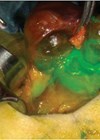
Detecting cancer margins during robotic head and neck cancer surgery using ambient mass spectrometry

We have known about altered metabolism in cancer cells since Otto Warburg described it 97 years ago. But can we take advantage of this knowledge in curing cancer? Jim Higginson explains the value of smoke generated during cancer surgery. The...

Endolymphatic sac surgery: controversial procedure for the treatment of Ménière’s disease

Landmark Paper: Thomsen J, Bretlau P, Tos M, Johnsen NJ. Ménière’s disease: endolymphatic sac decompression compared with sham (placebo) decompression. Ann N Y Acad Sci 1981;374:820-30. Of all of the chapters in the Landmark Papers book, the chapter that discussed...

The changing landscape of thyroid and parathyroid surgery

How has clinical practice in the management of thyroid and parathyroid disease has evolved in recent years? I perform very few head & neck operations where the patient tells me just one week following surgery that they ‘feel much better’....

Ethics, conduct and sinonasal surgery

For the three plenary sessions at ERS 2023, we asked top leaders in the field to enlighten us in the general aspects of our profession that need attention. Prof Gil Siegal will discuss the ethical questions we encounter in our...

In conversation with Prof Peter John Wormald: The past, present and future of treating CRS

At ERS2023, Prof PJ Wormald will lecture on the past, present and future of treating chronic rhinosinusitis (CRS). We caught up with him recently to hear about the major improvements, the hypes and his dreams for the future of treating...

A sound change: transitioning hearing healthcare to net-zero

Grassroot initiatives are often the most effective. When individuals come together and work with industry, changes are possible in reducing carbon emissions. This article summarises such an initiative working with companies to address Environmental, Social, and Governance (ESG) and Corporate...

Recent advances in the diagnosis of silent reflux

The vexed topic of reflux always generates much discussion, particularly when it comes to testing. We hear about a non-invasive assay that is gaining in popularity. Voice disorders impact around four percent of the UK population and can significantly hamper...

What has NAIROS taught us about septoplasty?

Septoplasty is a commonly performed procedure worldwide for nasal obstruction associated with a deviated nasal septum. In the UK, with long waiting lists for septoplasty, there is a large and unexplained variation in the incidence of this procedure between individual...

Developmental stuttering: a speech-motor impairment with sensory aspects

In treating patients who stutter, understanding the effects of sensory input (i.e. auditory input) can help to direct therapeutic approaches. Sensory processing has been identified as a contributory factor in several diagnoses, notably autism and ADHD [1], however it has...