You searched for "invasive"
Changing behaviour with a human factors approach
The Francis Report (2013) identified multiple problems relating to the safety culture of Stafford Hospital in the period 2005 – 2009, as well as serious failings in the supervisory and regulatory systems of the NHS. Particular criticism was directed at...
Talking through technology – keeping up with the mainstream
Augmentative and alternative communication (AAC) system development has often made early use of innovative technology. Touch screens have been a part of this technology for some time. In fact, touch screens were invented in 1965 but it wasn’t until the...Unpacking the World Health Organization’s World Report on Hearing: what does it say?
The inaugural report on hearing from the World Health Organisation is a tool for advocacy, and for getting hearing loss on government agendas. Nguyen Ngoc Bao Tran was 11 months old when her hearing loss was diagnosed. Despite being informed...Unpacking the World Health Organization’s World Report on Hearing: what does it say?
The inaugural report on hearing from the World Health Organisation is a tool for advocacy, and for getting hearing loss on government agendas. Nguyen Ngoc Bao Tran was 11 months old when her hearing loss was diagnosed. Despite being informed...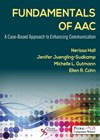
Fundamentals of AAC – A Case-Based Approach to Enhancing Communication
A comprehensive text that will appeal to speech and language therapists at all stages of their careers, from undergraduate through to seasoned professionals working directly in the field. Despite there being 64 contributors (mostly from the US), the editors have...
Does stress and anxiety worsen idiopathic sudden hearing loss outcomes?
There have been suggestions that the natural course of the idiopathic sudden sensorineural hearing loss (ISSNHL) is not affected by intensive therapy. There is speculation as to whether unknown factors affect the treatment prognosis. This is a retrospective study of...
Spread the therapy thick and quick to make sure it works
Speech sound disorders, such as apraxia, can negatively impact a child’s wellbeing - both their social wellbeing and their academic achievement. Traditionally speech and language therapy has attempted to remediate these difficulties using auditory feedback. More recently, advances in technology...
How to train adults with single-sided deafness and cochlear implants
Cochlear implantation (CI) in patients with single-sided deafness (SSD) has been carried out in Perth, Australia from 2008. It poses challenges to clinicians and patients who are trying to tune in the poorer ear while still having a normally hearing...
Future practice: tele-rehabilitation in speech and language therapy
It is known that our population is ageing, resulting in an increase in the number of people living with progressive neurological conditions such as Parkinson’s disease. Health services endeavour to deliver specialist and personalised care to all these people, often...
Transmastoid facial nerve decompression for persistent traumatic facial nerve paralysis
Facial nerve paralysis (FNP) can occur following trauma, with a small number of these patients requiring facial nerve decompression (FND) to aid recovery. The authors shared their experience in decompressing the facial nerve for persistent severe FNP via a transmastoid...
How do objective ratings of swallowing compare with patient-reported dysphagia QOL measures in the head and neck cancer population?
Swallowing may be assessed by a comprehensive battery of tools including instrumental/objective assessments, clinician-rated measures and patient-reported measures. The authors of this paper use secondary analysis to explore concordance between videofluoroscopy and a patient-reported dysphagia quality of life (QOL) measure....