ENT features

OBITUARY: Peter Valentin Tomazic (1982-2024)
By Wytske Fokkens & Claire Hopkins It is with shock and profound sadness that we announce the passing of our beloved friend, Valentin, who left us on June 3rd. Valentin was a bright, kind, and loving individual who touched the...

Patient initiated follow-up in head and neck cancer
Is it time for a change in the way we follow up head and neck cancer patients after treatment? Paul Nankivell and Hisham Mehanna explain the rationale for the PETNECK2 trial. After completion of curative intent treatment, clinical follow-up currently...

Robotic assisted orbital surgery (RAOS) – a novel approach to orbital malignancy surgery
Robotic technology in ENT surgery has been used in certain areas of head and neck cancer care but, in this article, we hear of an exciting development from the team at Guy’s & St Thomas’. Advances in surgical robotic technology...

Young CEORL-HNS: empowering the future of otorhinolaryngology
Young CEORL-HNS is a subgroup within CEORL-HNS which encompasses new specialists in ENT within training and up to the first decade or so as an accredited specialist. Giuditta Mannelli is the current president and is a head and neck surgeon...

Confederation of European ORL Societies - your society!
Per Cayé-Thomasen is a professor of otology and skull base surgery in Copenhagen. In Milan, he succeeded Cem Meco as the president of the CEORL-HNS. Under his presidency, the confederation has continued to develop its educational activities and encourage professional...
The integration of targeted therapy and surgery in advanced thyroid cancer clinical trials
One of the headline speakers, Mark Zafereo, will be talking at IFOS about thyroid cancer. We hear from his team about some of the areas they will be discussing. Locally advanced thyroid cancer generally refers to patients who have significant...

Prednisolone and/or acyclovir for Bell’s palsy
Landmark Paper: Sullivan FM, Swan IRC, Donnan PT, et al. Early treatment with prednisolone or acyclovir in Bell’s Palsy. N Engl J Med 2007;357(16):1598-607. Facial nerve paralysis as a consequence of Bell’s palsy can result in devastating long-term effects on...

Emerging robotic systems for head and neck surgery
As of December 2020, seven robotic surgical systems have received approval for use in different jurisdictions, and many more task-specific robots are in the pipeline. Jack Faulkner takes us through what’s on the horizon for head and neck cancer surgery....

Detecting cancer margins during robotic head and neck cancer surgery using ambient mass spectrometry
We have known about altered metabolism in cancer cells since Otto Warburg described it 97 years ago. But can we take advantage of this knowledge in curing cancer? Jim Higginson explains the value of smoke generated during cancer surgery. The...
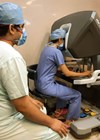
Setting up a robotic surgical practice: view from India
Transoral robotic surgery has an established role in head and neck cancer surgery. But how easy is it to set up a service in a resource-constrained environment? Gouri Pantvaidya and Ameya Pai give us a view from the Indian subcontinent....
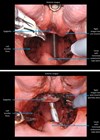
Robotic surgery for squamous cell cancer: the new frontiers
Although the da Vinci platform was FDA approved for early-stage oropharyngeal cancers, the indications have expanded. In this article, John Hardman explains how surgeons, with greater understanding of the strengths and limitations of robotic surgery, have systematically set out to...
Head and neck robotic surgery – considerations for the surgical trainee
In 2021, training in head and neck cancer surgery would be incomplete without some robotic resections under the belt. Henry Zhang explains how he did it and outlines the options available. With a wide range of applications in both benign...