
You searched for "training"
What’s in a name?
Kate Granger is a doctor and the founder of the #hellomynameis campaign; she is also a cancer patient. In this article she explains why she started the campaign, and why patient-centred care starts with an introduction. Chris and me the...Laryngeal papillomatosis
Laryngeal papillomatosis remains one of the most frustrating conditions seen by laryngologists. Sam Majumdar gives us an overview of the current science and clinical practice. Human papilloma virus is a small (> 8kb) double stranded DNA virus with approximately 200...5th Annual Inner Ear Disorders Therapeutics Summit
Coined by industry as the only meeting of its kind and uniquely positioned to share fresh ideas and assess viable approaches to your most pressing preclinical, translational, and clinical bottlenecks, the 5th Inner Ear Disorders Summit returns as a forum to benchmark learnings from past failures, reignite momentum and develop investment into the audiology therapeutic landscape.
Management of peritonsillar abscesses – should we be offering a hot tonsillectomy?
Peritonsillar abscesses (PTAs) are one of the most common reasons for patients being referred to ENT services on an emergent basis worldwide. The conventional treatment for adult patients with a PTA in the UK involves needle aspiration or incision and...Barotrauma
Barotrauma is an injury which is due to the effects of pressure upon an air-containing space. Healthy middle ear cavities and paranasal sinuses are normally in equilibrium with the atmospheric pressure, but if an individual moves away from the surface,...The changing landscape of thyroid and parathyroid surgery
How has clinical practice in the management of thyroid and parathyroid disease has evolved in recent years? I perform very few head & neck operations where the patient tells me just one week following surgery that they ‘feel much better’....Ida Institute telecare tools help teens take charge of their hearing healthcare
In this article Ena Nielsen from the Ida Institute discusses new ways to put teens in the driver’s seat of their hearing healthcare needs. The teenage years can be a challenging time for any young person. When hearing loss is...Dementia assessments for people with deafness, deafblindness or visual impairment in Scotland
How is the medical community doing with assessing cognitive decline in those with a sensory impairment? The ALLIANCE Scottish Sensory Hub was tasked with finding out. Background There is growing evidence of a connection between dementia and sensory loss. However,...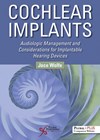
Cochlear Implants - Audiologic Management and Considerations for Implantable Hearing Devices
This book aims to serve as a must-have resource for those in higher education in audiology and cochlear implant audiologists wanting to go the extra mile in their approach to maximise clinical outcomes for their patients. Jace Wolfe is a...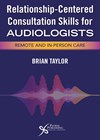
Relationship-Centered Consultation Skills for Audiologists: Remote and In-Person Care
With the rise in tele-audiology services alongside changes in hearing aid technology, there is an added importance in providing our patients with the care they need within our clinical settings and remotely. This book highlights the key skills to be...
The role of imaging in differentiating rare temporal bone neoplasms
This paper provides a useful tool to assist in determining the diagnosis of benign neoplasms of the temporal bone using readily available imaging modalities. Specifically, this group have looked at chondrosarcoma, an expansile hypermetabolic mass lesion usually found in the...


