You searched for "psychological"

Diana Deutsch
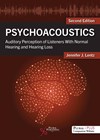
Audiologists think about sound a lot. In fact, it is a bit of an occupational hazard. The majority of that time is usually devoted to thinking about sound in a purely functional sense (for example, adjusting a hearing aid to...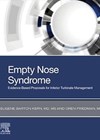
Empty Nose Syndrome: Evidence Based Proposals for Inferior Turbinate Management
To cut or not to cut, that is the question… The authors of Empty Nose Syndrome emphatically implore the reader to spare the inferior turbinate, lest they cause patients this undue misery! This book is a thought-provoking journey through the...
Waiting for smell to recover after post-viral hyposmia
The patient with post-viral anosmia will always want to know how long they must wait to reach a plateau. This study from South Korea of a comparatively small group (20 controls and 63 patients) tells us that favourable prognostic indicators...
Counting up discourse
Speech and language researchers and health professionals alike strive to measure communication abilities using relevant and psychometrically sound tools. Discourse measures are potential tools which reflect everyday communication more accurately than other more traditional measures. However, time has been a...Facing up to the challenge of behavioural observation in infant hearing assessment
The ability to assess detection and discrimination of speech by infants has proved elusive. Dr Iain Jackson and colleagues discuss how new technologies and fresh approaches might offer valuable insight into young infants’ behavioural responses to sound. The limits of...
Scientific Foundations of Audiology: Perspectives from Physics, Biology, Modeling and Medicine
Scientific Foundations of Audiology – Perspectives from Physics, Biology, Modeling and Medicine is a unique textbook which discusses a wide range of state-of-the-art topics in hearing, vestibular and brain science. The editors purport that this book is geared towards doctoral...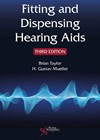
Fitting and Dispensing Hearing Aids – Third Edition
Fitting and Dispensing Hearing Aids – Third Edition is intended primarily as a course book for “non‑audiologists or undergraduate audiology students who have yet to fit their first pair of hearing aids”. It is aimed primarily at students in the...