You searched for "ESS"
Presents, patients and perspicacity
Strictly speaking, one is no longer allowed to accept presents from grateful patients as it could be interpreted as coercive and detrimental to the doctor-patient relationship. I can see that if the personal gift were substantial or financial, or if...National selection: is the research section of the portfolio fit for purpose?
Applications for ENT training roles in every country require certain criteria to be met. In the UK, ST3 recruitment applications have scores allocated to research experience. In this opinion piece, the authors share their assessment of the potential issues around...Could OtoRecall transform ENT learning?
Training continues to change and evolve in the face of changing working practices and, of course, the impact of unprecedented events like the pandemic. The basics remain important for safe practice as training and work continue to evolve; innovative tools...Embracing the changes prompted by lockdown
March 2020 introduced the concept of lockdown to audiology services in the NHS, prompting a rethink of how to best provide hearing care. In this issue, we hear from Hanna Jeffery, a Clinical Scientist working at the Royal Glamorgan Hospital...Redeployment of audiologists during COVID-19
As the demand on intensive therapy units in the NHS increased, volunteers from the audiology profession stepped in to support colleagues. Here, they share their experiences of caring on the frontline. Redefining normal: from outpatients to the ICU By Emilee...2014: Are today’s implantable devices better than conventional solutions for patients with conductive or mixed hearing loss?
Patients with conductive or mixed hearing loss become candidates for amplification when reconstructive surgery is not viable. Three common amplification options are conventional acoustic devices, such as behind-the-ear devices (BTEs), (implantable) bone-conduction devices and active middle ear implants. The goal...Laryngotracheal stenosis and malacia care
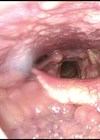
Why laryngotracheal stenosis and malacia (LTSM) care matters now? In late 2019, reports began to emerge of severe respiratory infections caused by a novel coronavirus. In the months that followed, intensive care admissions in the UK rose more than tenfold....